Double-Layer Zero-Buoyancy Cable 2×0.75mm² + Shielded Pair 1×2×0.2mm²
Zero-Buoyancy Cables · Marine & Subsea
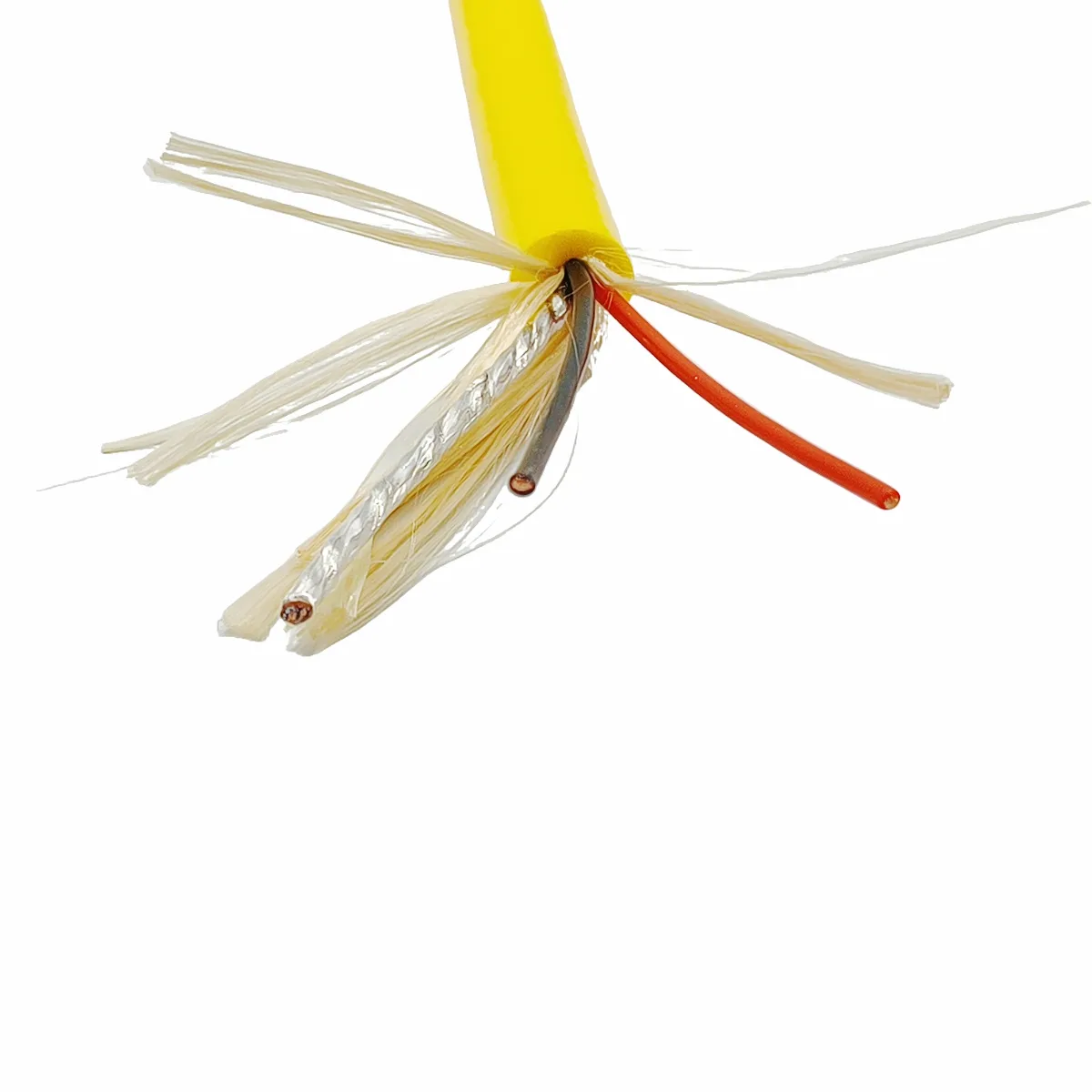
Double-layer zero-buoyancy 2×0.75 + (1×2×0.2)P
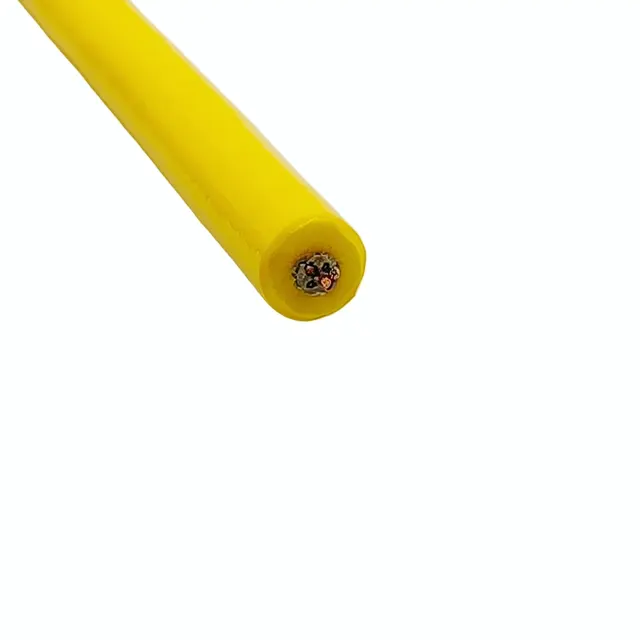
Double-layer zero-buoyancy cable with two 0.75mm² power cores and one shielded 0.2mm² pair, LCP strength ropes and a foamed plus glossy TPU jacket.
Product overview
The double-layer zero-buoyancy cable is a cable type built for underwater equipment and subsea work platforms: one cable carries both power and signal, and the construction brings the whole cable close to neutral buoyancy in water. This version combines two power cores with one shielded data pair; the jacket is a two-layer composite of a foamed layer and a glossy outer layer, which eases handling underwater and reduces the effect of cable weight on vehicle attitude and working depth.
Compared with common single-jacket buoyant cables, the two-layer approach separates buoyancy control from external protection: the inner foamed layer lowers the overall density and provides buoyant support, while the outer glossy layer provides abrasion resistance, hydrolysis resistance and resistance to ageing from long immersion. The two layers are co-extruded in one pass and bond tightly at the interface, which reduces the risk of delamination, blistering or water ingress after long soaking. This division of work lets one cable keep low in-water weight while retaining good surface strength.
Construction and materials
- Conductor: stranded bare copper, 0.75mm², conductor diameter 1.12 mm
- Insulation: PE, 0.34 mm thick, insulated diameter 1.8 mm, cores in red and black
- Data pair: one pair of 0.2mm² cores, blue/blue-white, twisted and wrapped with aluminium foil
- Shield: aluminium foil plus tinned copper wire braid, coverage about 75%
- Isolation layer: polyester tape lapped over the data pair to hold its position in the core
- Cabling: the two power cores and the shielded data pair are cabled together, cabled diameter 4.6 ± 0.2 mm
- Filler and reinforcement: 7 × 3000D LCP fibre ropes laid longitudinally, providing both tensile strength and a round core
- Wrapping: non-woven tape, as cushioning and isolation before jacket extrusion
- Inner jacket: foamed TPU layer, 2.45 mm thick
- Outer jacket: glossy TPU layer, 0.65 mm thick, yellow
The data pair and the power cores are laid symmetrically during cabling, with the shield facing the power cores, which reduces coupling from the supply current into the signal circuit. The strength fibre ropes are kept apart from the copper conductors so that pull is carried mainly by the fibre and the copper carries little of it, which improves life under repeated deployment.
Key features
Buoyancy under control. The inner foam layer brings the cable density close to that of water, so in water it sinks slowly instead of dropping to the bottom and dragging the equipment, and it does not float at the surface drifting with the current, which lets the operator tell where the cable lies.
Two-layer protection. The foam and glossy layers each do their own job; the dense, smooth outer layer gives low friction during handling and is less likely to catch on subsea structures or aquaculture cages.
Stable signal. The data pair has combined aluminium foil and braid shielding plus its own isolation layer, which reduces interference from the power cores into control signals and sensor data.
Flexible and easy to handle. Stranded conductors and a loose cabling lay give the cable a small bending radius, so it suits winch, reel and hand-hauling deployment and does not crack at the jacket after repeated bending.
Electrical and mechanical performance
Electrically, the power core section is chosen for the supply needs of small and medium underwater equipment and meets the current demand in normal operation; the separately shielded data pair suits control commands and sensor data. Rated voltage, insulation resistance, withstand voltage and signal transmission figures are subject to the specification document confirmed by both parties; the point of this construction is integrating power and signal in one cable, not maximising current capacity alone.
Mechanically, the finished diameter is 10.8 ± 0.2 mm and the cable is close to balanced in water, so hand-hauling feels almost weightless. The LCP fibre ropes act as the strength member, laid longitudinally and kept independent of the conductors and data pair, so the construction resists deformation under pull. Service temperature range, minimum bending radius and tensile strength are subject to the specification document confirmed by both parties; the jacket material keeps good flexibility and tear resistance under long immersion, which suits cyclic deployment.
Typical applications
- Power and signal connection for ROVs and shallow-water work platforms
- Power and data lines for underwater cameras, lighting, sonar and inspection equipment
- Underwater monitoring, feeding and environmental sensing equipment in aquaculture areas
- Deployment, towing and recovery of subsea instruments in marine engineering
- Pool cleaning robots, underwater cleaning and salvage equipment
In these applications the cable usually moves with the equipment or is repeatedly spooled by a winch, and buoyancy balance and flexibility matter more to the working experience than current capacity alone; the two-layer jacket helps keep the cable's attitude in the water under such duty.
Selection and customisation
Selection starts with the working depth, the power the equipment needs and the type of signal, then the combination of power core section and data pair is fixed. For long deployments or higher pull, the strength member specification and the jacket colour can be customised. Termination at both ends (connector, potting or bare cores), reel length and packaging are agreed per project.
Where the environment involves oil, chemical media, strong UV exposure or frequent rubbing on rock, state this before ordering so that the outer jacket compound and the construction can be adjusted. All dimensions and electrical parameters are finally subject to the specification document confirmed by both parties; if buoyancy has to be tuned on a similar construction, this is done through the thickness and formulation of the foam layer, agreed per project.
Related in Zero-Buoyancy Cables
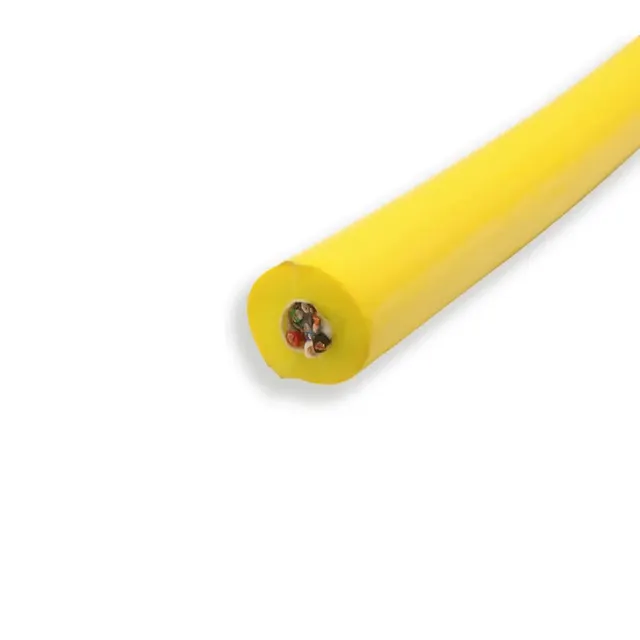 Buoyant cable 3x0.75+STP CAT6
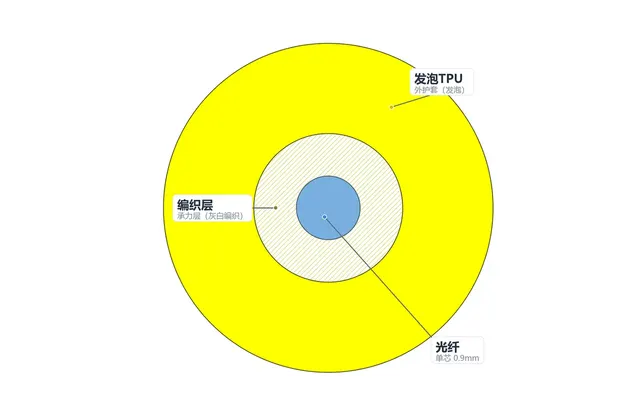 Buoyant cable, single sheath, 1-core fibre, 200 kg tensile
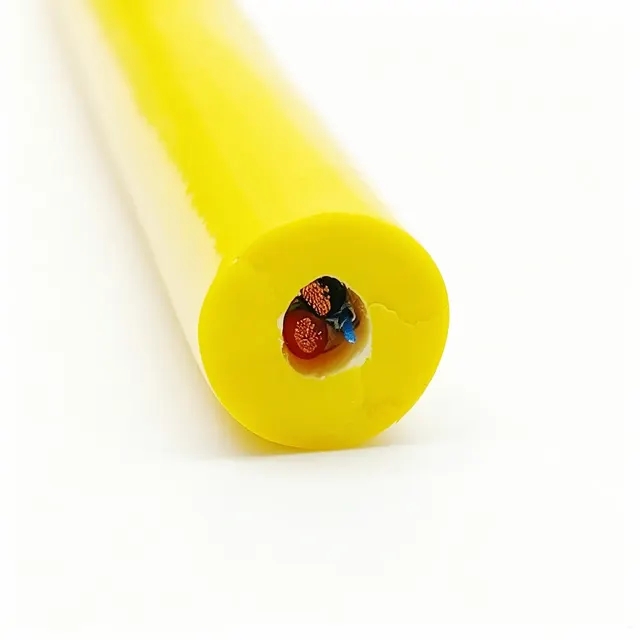 Double-layer neutrally buoyant cable 2×14AWG+24AWG+1SMF
 Double-sheath buoyant cable 2×0.5mm²+2×1SMF
Engineering enquiry