Tethered Drone Cable 2x0.2 mm2, Tinned Copper, FEP, Aramid Braid, 2.3 mm
Tethered Drone Cables · Tethered Systems
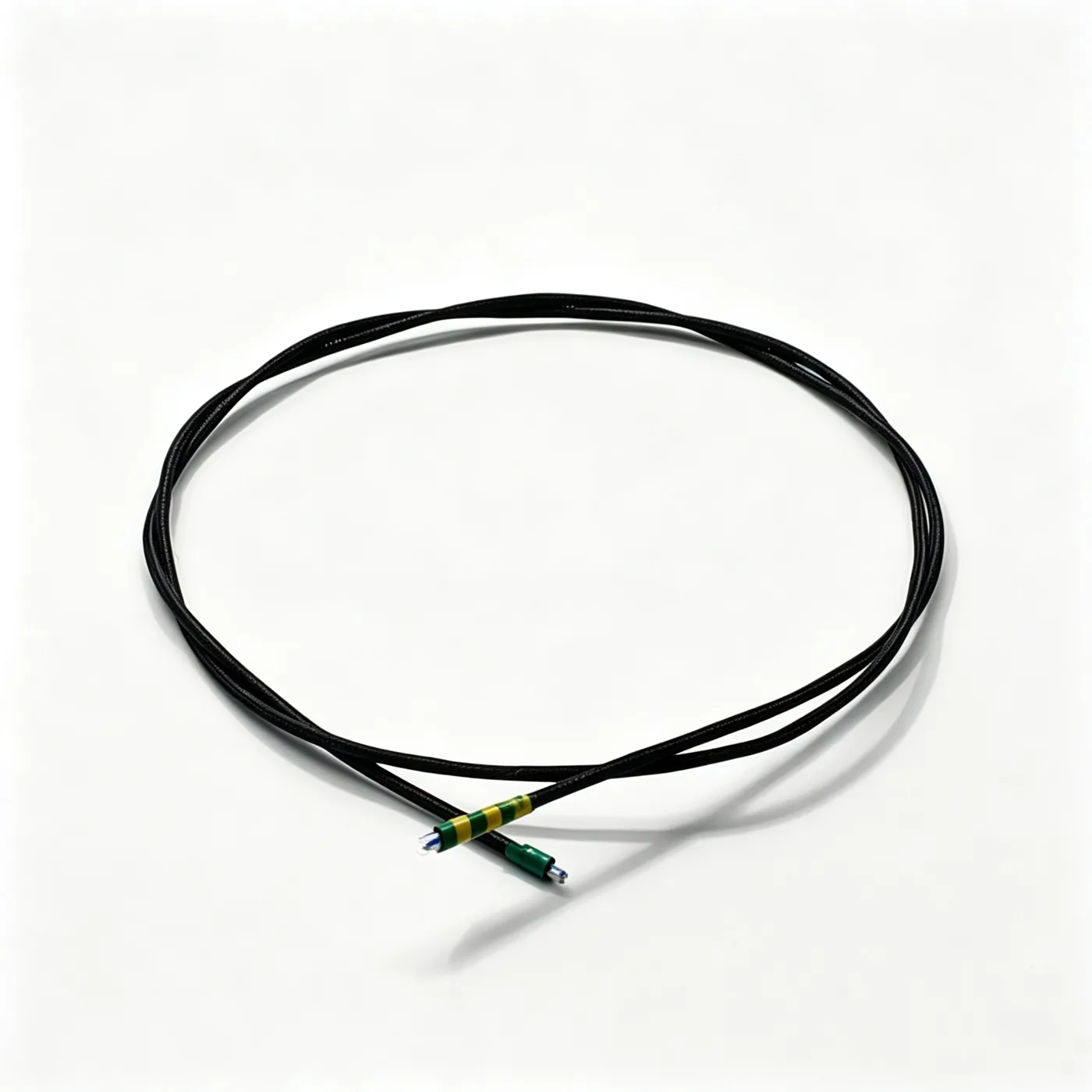
Tether cable 2x0.2mm2
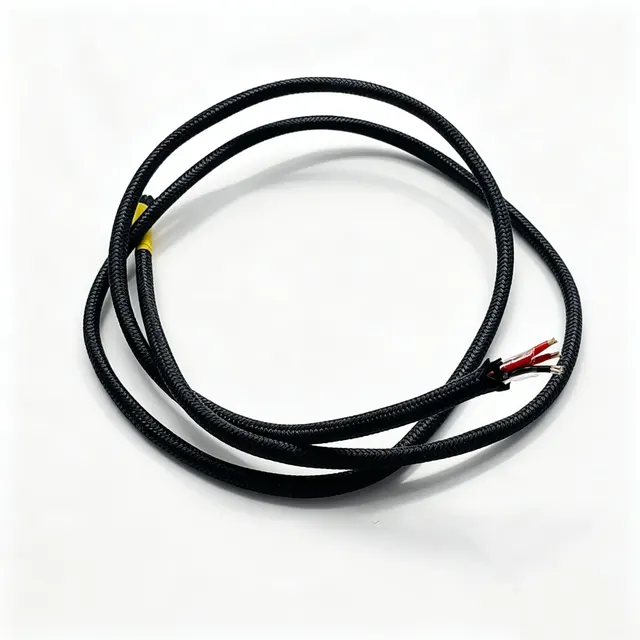
Two-core tethered drone cable, 2x0.2 mm2 tinned copper, 0.25 mm FEP insulation, nylon strength fillers and aramid braid, 2.3 mm OD, about 9.2 g/m.
Product overview
When a tethered drone performs long-endurance hover, communication relay or aerial lighting, the aircraft must stay continuously connected to the ground power supply. The tether must carry power and signals and also remain structurally intact under wind, deployment and repeated bending. This two-core tether is designed for low weight: conductor, insulation, strength filler and braided outer layer are arranged in separate zones, making the cable thin, light and flexible for longer hover lines.
Compared with ordinary drone cable, a tether works more like a fixed connection: one end is fixed at the airborne end and the other connects to the ground deployment or power unit, carrying its own weight and tension over long periods while being sensitive to bend cycles. Separating the conductive units from the load-bearing units so that tension does not act directly on the insulated cores is therefore common practice for this product type.
In use, the main concerns for a tether are circuit continuity and outer protection: cores fatigue at repeatedly bent points, and once the outer braid is worn through, load capacity drops noticeably. The design therefore needs cores that are supple and evenly loaded when bent, a braid that fits tightly against the core to reduce relative movement between layers, and enough operating margin for manual termination.
Construction and materials
- Conductor: tinned copper strands (cross-section 0.2 mm²), formed from 7 x 0.2 mm tinned wires twisted in the same direction. The tin coating serves two purposes: it inhibits oxidation of the copper in damp environments and facilitates soldering and termination.
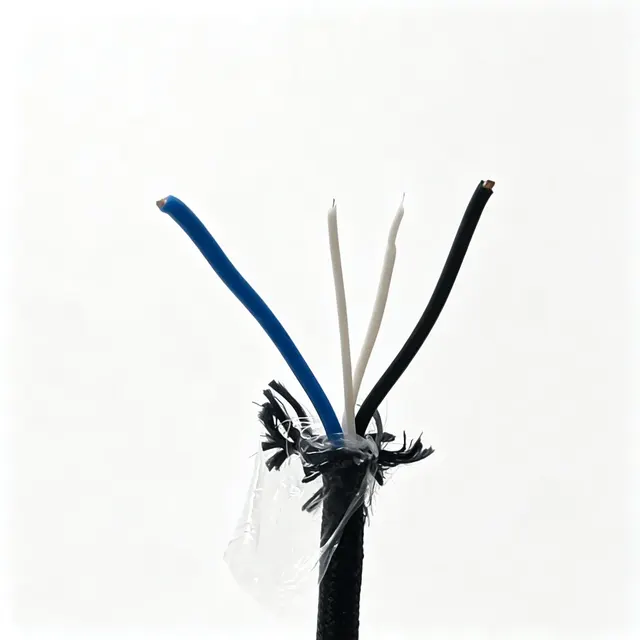
- Insulation: FEP, thickness 0.25 mm, core insulation diameter 1 ± 0.08 mm; the two cores are blue and white for polarity identification at termination. FEP is a fluoroplastic with stable dielectric performance and good temperature and chemical resistance, suited to lightweight small-diameter cables.
- Cabling and filling: the two cores are cabled in the same direction, with 2 x 0.5 mm nylon yarns placed between them as auxiliary load-bearing and compression-resistant elements; the cabled core is wrapped with polyester tape for separation, shape retention and core protection.
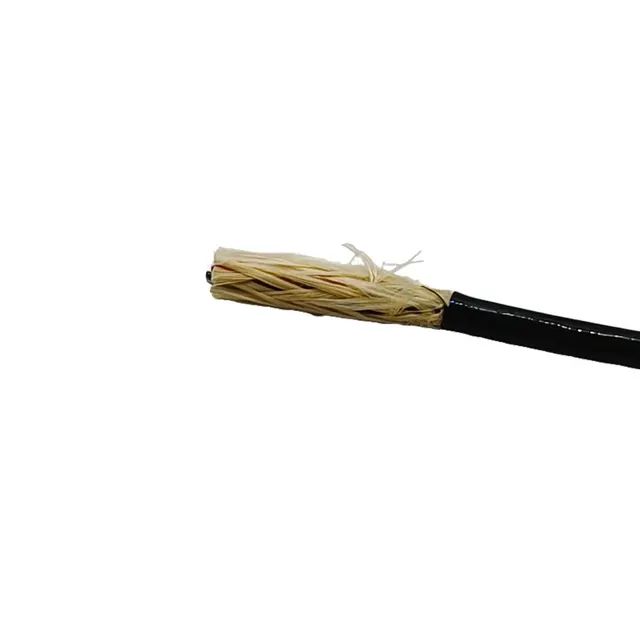
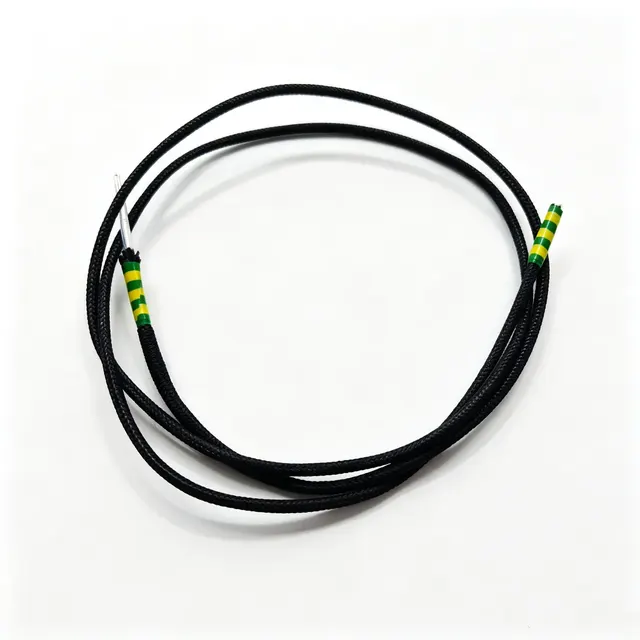
- Outer sheath: black aramid fibre braid, 800D per yarn, 16 carriers; the braid is the outermost layer and no separate extruded sheath is applied in this construction. The braid provides the main tensile and abrasion resistance while keeping the cable flexible.
The construction can be summarised as a small-section conductive unit, an independent load-bearing unit, thin insulation and a braided outer layer. This combination gives good tensile capability at low weight per unit length; the trade-off is that external protection relies on the braid, so sharp scratches and crushing must be avoided in use.
Key features
- Lightweight: small-diameter two-core construction with low weight per metre, suited to weight-sensitive platforms.
- Separated load and conductive paths: tension is carried by the nylon yarns and the braid, not directly by the cores, which helps extend service life.
- Abrasion and bend resistance: a tight, uniform outer braid with supple stranded cores suits repeated deployment and coiling.
- Electrical stability: fluoroplastic insulation is little affected by temperature and humidity, suited to continuous long-duration power supply.
- Easy termination: colour-coded cores and tinned conductors simplify joint making and routine servicing.
- Supple and easy to route: small bend radius and low spring-back for routing along arms, winches and cable ducts.
Electrical and mechanical performance
- Finished outer diameter: 2.3 mm, measured over the outermost braid; no separate extruded sheath.
- Reference weight: approximately 9.2 g/m, subject to measurement on the finished cable.
- Rated voltage and current rating: related to conductor cross-section, working length and heat dissipation, subject to the specification document confirmed by both parties.
- Temperature rating: insulation and braid materials of the appropriate temperature class can be selected per project; the specific range is subject to the specification document confirmed by both parties.
- Tensile strength and minimum bend radius: vary with core count, cross-section and operating conditions; no single fixed value is committed and they can be agreed in the specification document.
- Electrical performance: insulation resistance and withstand voltage are confirmed as finished-product inspection items; the stranded conductor construction gives good flexibility and bending fatigue performance.
Typical applications
- Ground power and signal return for tethered drones: continuous power from the ground supply during hover, with control and image signals carried in the same cable.
- Tethered aerostat platforms: power and data connection between balloon-borne or tethered platforms and the ground.
- Vehicle-mounted and vessel-mounted mobile platforms: repeated deployment in mobile scenarios requiring a supple, abrasion-resistant and reliable tensile cable.
- Test and temporary measurement lines: connections requiring light weight, small diameter and moderate tensile capability.
- Emergency communications and monitoring: applications needing continuous ground power with long airborne endurance.
Selection and customisation notes
- Core count and conductor cross-section can be determined from supply current, line loss and hover length; multicore or larger cross-sections can be used if necessary.
- Where optical signals must also be carried, a fibre unit can be incorporated into the cable to form an optoelectric hybrid construction.
- Length, reel type and termination method are defined by the project conditions; end connectors can be pre-assembled as required.
- Moisture, salt spray, UV and mechanical friction in the operating environment affect material selection and can be agreed in the specification document.
- Where higher tensile requirements apply, the strength member specification can be increased or the braid construction adjusted while keeping the small diameter and flexibility.
- Colour and surface marking can be agreed per project, and termination method, shielding and earthing can be confirmed at the same time.
- Specific parameters are subject to the specification document confirmed by both parties and can be customised per project.
Related in Tethered Drone Cables
Engineering enquiry