PDK81301-1x2.0mm2 Watertight Optoelectric Cable - 10 kV, 4000 N, 12 mm OD
Watertight Optoelectric Cables · Marine & Subsea
PDK81301
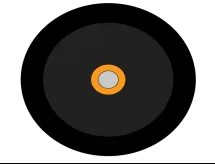
Watertight optoelectric subsea cable, 1x2.0 mm2 bare copper, PE insulation, XLPE inner sheath and TPU outer sheath, 10 kV rated voltage, 4000 N tensile.
Product overview
The watertight optoelectric cable is a series developed by PAIDE Cable for subsea working environments, designed around long-term immersion, water pressure resistance, tensile strength and resistance to repeated bending, and used for power supply, signal and data transmission to subsea equipment. This article takes PDK81301-1x2.0 mm2 as a typical specification to describe the construction, main parameters and application points of the series. This specification uses a concentric construction in which conductor, insulation, inner sheath and outer sheath are applied in sequence; each layer has an even thickness and the core is round and compact, which facilitates hull penetrations, sealing glands and the crimping of subsea connectors. The outer sheath is TPU, resistant to hydrolysis and abrasion, and suits long-term use underwater. Where electrical power and optical signals must be transmitted together, the series can include a single-mode fiber unit in the core to form an optoelectric composite and reduce the number of cables laid to subsea equipment. The same series can also be combined by voltage class, core count and cross-section, and by whether a fiber, network or signal unit is required; common models include PDK81301-4x2.5 mm2, PDK81301-4x1.0 mm2+STP CAT6, PDK81301-3x2.5+8SMF and PDK81301-2x1.0+4SMF, covering requirements from pure power transmission to optoelectric composites. Layer dimensions, voltage and temperature values are listed in the Construction and materials and Electrical performance sections; the remaining sections give qualitative descriptions only, and actual supply remains subject to the specification document confirmed by both parties.
Construction and materials
The conductor is stranded bare copper with a multi-strand construction and a stranded diameter of 1.84 mm, balancing current-carrying capacity and flexibility. Fine-strand bunching gives the conductor a margin of elongation under tension and repeated bending, and together with the insulation and sheath it forms a flexible overall structure.
The insulation is PE with an average thickness of 0.68 mm, a minimum thickness of 0.57 mm and an insulation diameter of 3.2 mm; the identification color is orange, which helps with core sequencing in multi-core specifications. Polyethylene insulation has stable dielectric properties and shows little reduction in insulation resistance during long-term immersion, which makes it suitable as the insulation of a subsea power circuit.
The inner sheath is XLPE, black, with an average thickness of 4.4 mm, a minimum thickness of 3.74 mm and a finished inner-sheath diameter of 12 ±0.3 mm, forming electrical and mechanical protection together with the insulation. The inner sheath is extruded densely and fills the gaps in the core, reducing paths for water to penetrate axially, while giving the outer sheath a round base for extrusion.
The outer sheath is TPU, black, with an average thickness of 2.0 mm, a minimum thickness of 1.7 mm and a finished diameter of 16 ±0.3 mm, forming a hydrolysis- and abrasion-resistant outer layer for conditions involving water flow and repeated deployment. The TPU sheath also offers good oil resistance and tear strength, reducing sheath damage from underwater towing and contact with the hull.
Multi-core specifications in the same series use fillers and wrapping at cabling. For example, PDK81301-4x2.5 mm2 uses PP rope with non-woven wrapping for a rounder core; the composite network specification uses PP filler rods with 1500D LCP fiber to improve tensile performance; some models use water-blocking yarn and LCP fiber as filler and braiding materials to improve longitudinal water blocking. A network unit can use an aluminium foil plus tinned copper braid shield with 80% coverage to suppress external interference.
Key features
- Watertight and pressure-resistant: the double-sheath construction combined with dense filling fills the gaps in the core, which suits long-term immersion and operation under a certain water pressure.
- Flexibility and bending: fine-strand conductors with flexible sheath materials allow deployment, coiling and subsea laying, and repeated bending does not readily crack the sheath; the minimum bending radius of each specification is controlled in steps as a multiple of the diameter, see the Electrical performance section.
- Temperature range: several temperature classes are available according to insulation and sheath material, covering the difference between high deck temperatures and low subsea temperatures.
- Tensile strength and abrasion resistance: the TPU outer sheath resists hydrolysis and abrasion; for long suspended runs or load-bearing deployment, strength members can be added and the construction customized to the tensile requirement.
- Flexible combination: power cores, signal cores, network units and fiber units can be combined in one cable, which simplifies wiring on subsea equipment.
Electrical performance
Taking PDK81301-1x2.0 mm2 as an example, this specification has a rated voltage of 10 kV and a maximum conductor DC resistance of 8.8 Ω/km, and is used for long-distance power supply and signal circuits to subsea equipment. The conductor DC resistances listed below are maximum values at 20 °C, numbered 1 to 5 from top to bottom for reference in selection:
- Item 1 PDK81301-4x2.5 mm2: PP insulation, TPU outer sheath, rated voltage 1000 V, maximum conductor DC resistance 7.45 Ω/km, finished outer diameter 11.6 ±0.3 mm.
- Item 2 PDK81301-4x1.0 mm2+STP CAT6: rated voltage 300/500 V, maximum DC resistance 18.7 Ω/km for the 1.0 mm2 conductor and 84.1 Ω/km for the 0.2 mm2 conductor, finished outer diameter 12.6 ±0.3 mm.
- Item 3 PDK81301-3x2.5+8SMF: finished outer diameter 14.7 ±0.5 mm, rated voltage 450/750 V.
- Item 4 PDK81301-6-core single-mode fiber: G657A2 single-mode fiber, attenuation not more than 0.3 dB/km at 1550 nm and not more than 0.5 dB/km at 1310 nm, sheath diameter 5.5 ±0.5 mm.
- Item 5 PDK81604-2x16AWG+23AWG+ADS 1x2x23AWG-400KG: rated voltage 600 V, maximum DC resistance 14 Ω/km for the 16AWG conductor and 74 Ω/km for the 23AWG conductor, tensile strength 4000 N, finished inner-sheath diameter 12.8 ±0.2 mm and finished outer-sheath diameter 14 ±0.5 mm.
Minimum bending radius and rated temperature are graded by specification for easy comparison. For minimum bending radius, the typical specification of this section and item 3 above are 15D, items 1, 2 and 5 above are 10D and item 4 is 20D, where D is the cable outer diameter. For rated temperature, items 1 and 2 above cover -40 °C to +105 °C, the typical specification and items 3 and 4 above cover -30 °C to +105 °C, and some other specifications in the series cover a low-temperature band of -40 °C to +90 °C.
Typical applications
- Power supply and signal transmission for subsea equipment, such as underwater lighting, cameras, acoustic and inspection devices.
- Power, control and data transmission circuits for underwater vehicles and subsea working platforms.
- Applications requiring optoelectric composite transmission, with power supply, Ethernet communication and fiber data transmission in one cable.
- Mobile laying situations in marine engineering, subsea observation and salvage work that involve repeated deployment and coiling.
- Fixed or semi-fixed installation in long-term immersion where the sheath must resist hydrolysis and abrasion.
Customization and selection notes
- Voltage class, conductor cross-section and core count can be determined from the actual load and transmission distance; where several signal circuits are needed, a construction with several sub-core groups laid in parallel can be selected.
- Circuits requiring shielding can use aluminium foil plus tinned copper braid or similar shields, with braid coverage supplied to requirement.
- Sheath material can be selected between TPU and PUR, and sheath color and print marking (brand, specification, metre marking) can be customized as required.
- Before selection, please clarify the working depth or water pressure, single laying length, tensile requirement, minimum bending radius and operating temperature range.
- When the cable is to be fitted with subsea connectors, please provide the connector model and sealing method so that the outer diameter and construction can be matched.
- For fiber composite specifications, please state the fiber type, fiber count and permitted attenuation.
- Specific parameters are subject to the technical specification confirmed by both parties. The data in this article is taken from current PAIDE Cable specifications; different batches and custom constructions may vary, and samples and test reports can be provided on request.
Related in Watertight Optoelectric Cables
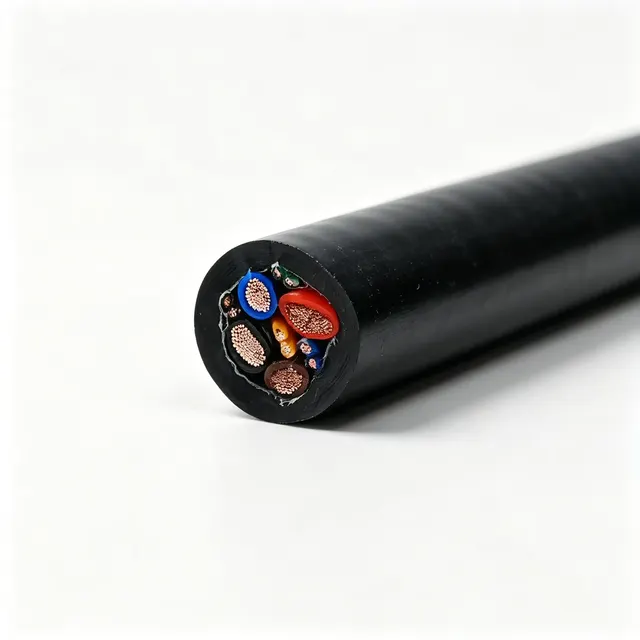 4×2×24AWG (UTP) + 2×14AWG + 2×12AWG
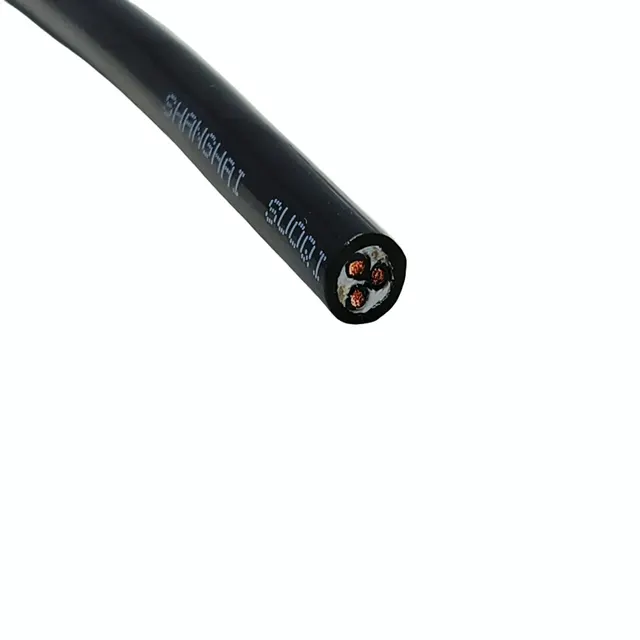 Custom
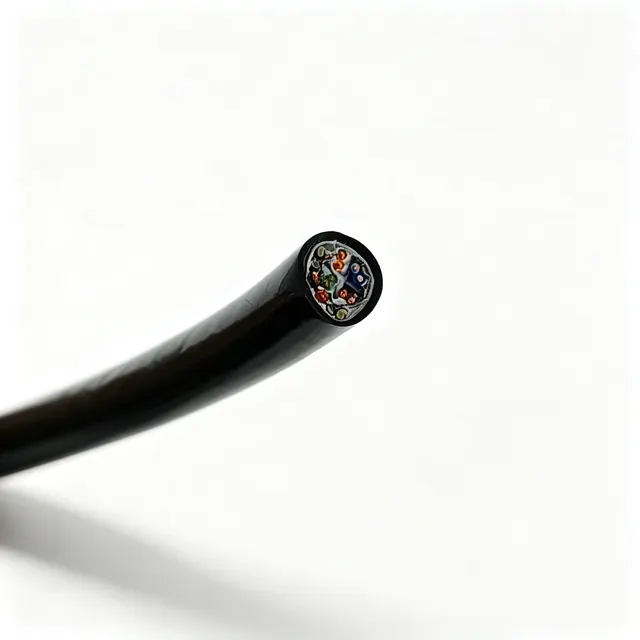 Longitudinally watertight cable 2×22AWG+STPCAT6-100KG
 PDK81301
Engineering enquiry