Crane Drum Cable 4×4 mm² + 2.5 mm² + 4-Core Network, 18.3 mm
Crane & Hoist Drum Cables · Industrial Automation
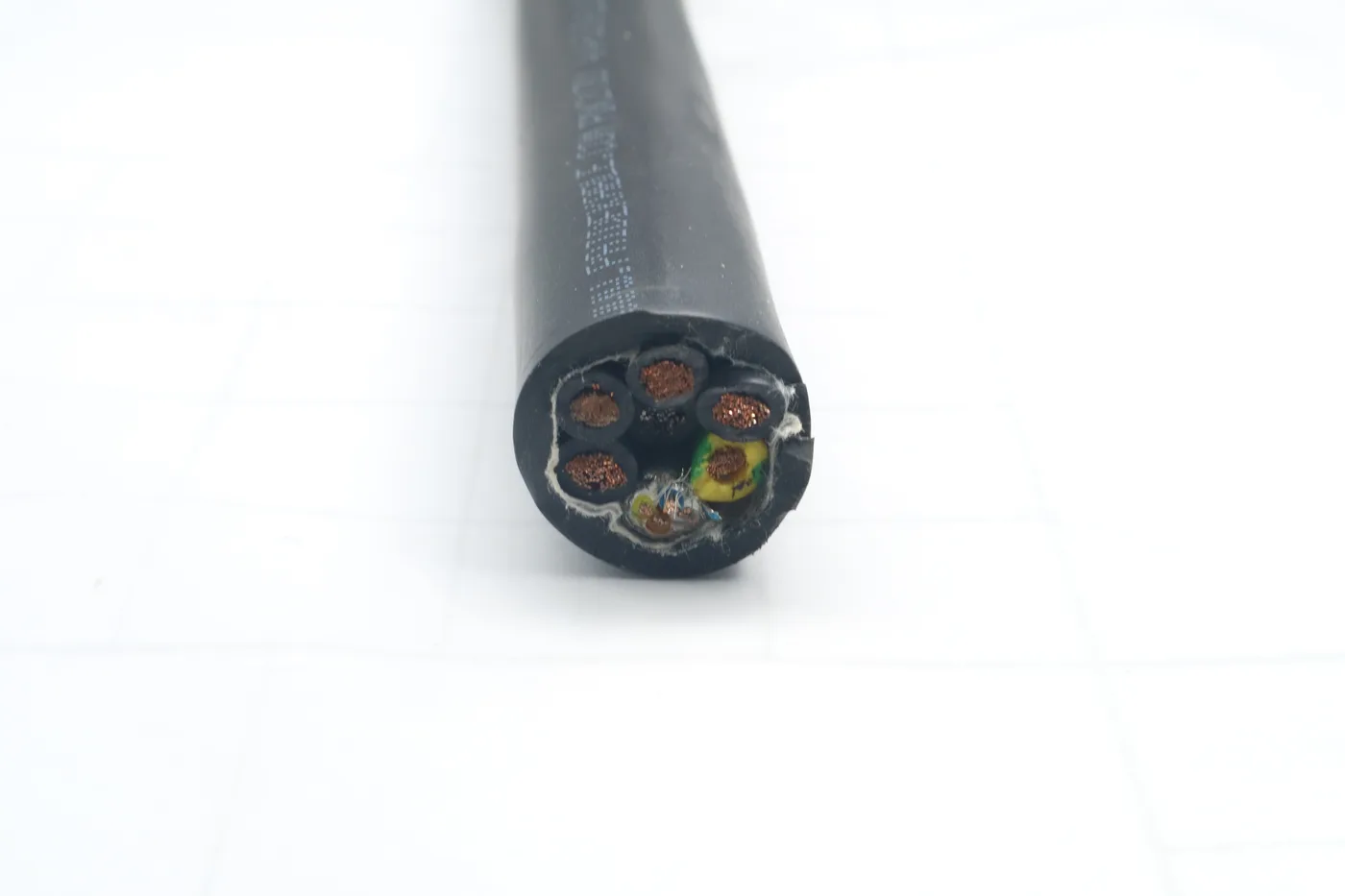
Drum cable 4×4 + 2.5 + 4-core network
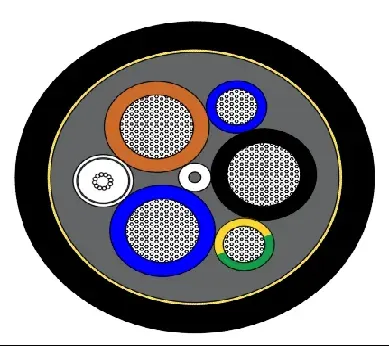
Crane drum cable with 4 × 4 mm² power cores, a 2.5 mm² earth core and a four-core network group around a central steel strength member, NBR sheath.
Product overview
This product is a composite cable for the drum reeling systems of lifting equipment, used on crane hoisting gear, trolley travel gear and on grabs and lifting attachments that are wound frequently. One end is fixed to the drum and the cable is paid out and reeled in repeatedly as the machine works, so it operates continuously under a combination of suspended tensile load, bending, twisting and friction. Flexibility, tensile capacity and the sheath's resistance to abrasion, oil and weather are therefore all demanding.
This type combines power cores, an earth core and a network group within one core, so that power supply and signal transmission are installed in a single run, reducing the number of cables on the drum and the space they occupy. A metallic strength member at the centre of the core carries the suspended load independently, so the cores take no part in load bearing, which improves fatigue behaviour under long-term winding. The product is manufactured to the specification document confirmed by both parties, and sheath material, delivery length and packaging can be agreed to suit site conditions.
Construction and materials
- Conductor: bare copper strands, multi-strand (power core, nominal cross-section 4 mm²)
- Conductor: bare copper strands (earth core, nominal cross-section 2.5 mm²)
- Insulation: automotive-grade compound, 1.15 mm thick, black (power core)
- Insulation: automotive-grade compound, 1.4 mm thick, yellow-green (earth core)
- Network group: four-core stranded construction, placed at the centre of the core, with a PVC sheath over it
- Strength member: 2.5 mm steel wire, laid parallel and coaxial with the core
- Cabling: cores stranded in sequence Tape: non-woven fabric wrap
- Outer sheath: nitrile rubber, 1.8 mm thick, black, extruded
Both the power and earth cores use bare copper bunch-stranded conductors with fine individual wires and a high strand count, so each wire sees little strain in bending and repeated winding does not readily break strands. The insulation is applied by extrusion with a close fit to the conductor and stable concentricity; the cores are of uniform diameter, so the cabled core is round and shares load evenly.
The network group is placed at the centre of the core and covered by a PVC sheath, keeping its position relative to the power cores fixed so that the units do not press on each other during winding and twisting. The steel strength member is positioned at the centre together with the network group and takes the suspended load directly, leaving the cores to conduct. The non-woven tape binds the stranded cores, prevents them from loosening, and forms a separating layer between core and sheath that limits deformation of the cores when the sheath is extruded.
The outer sheath is extruded nitrile rubber, closely bonded to the tape layer with no delamination or gaps. Nitrile rubber is stable in mineral oil, gear oil and hydraulic oil and under outdoor UV exposure, so it copes with the alternating oil contamination, dust and sunlight found on crane sites.
Key features
- Good flexibility: fine-wire bunch-stranded conductors with soft insulation and sheath suit small-radius, high-frequency winding
- Independent load bearing: the metallic strength member is laid separately from the cores, so tensile load is not passed to the conductors
- Abrasion and oil resistance: the nitrile sheath withstands oils and common chemical media, suiting mobile installation
- Stable weathering: the sheath material copes with outdoor sunlight and temperature swings and resists cracking in long service
- Integrated composite: power, earth and network signals in one cable simplify drum wiring and counterweight design
- Round and symmetrical: the cabled core is round, so the cable spools evenly and layers do not press into each other
Electrical and mechanical performance
- Core diameter: 14.7 mm
- Finished outer diameter: 18.3 ± 0.3 mm
- Insulation temperature rating: 80 °C
- Rated voltage: determined by project requirements, subject to the specification document confirmed by both parties
- Minimum bending radius: determined by drum diameter and installation method, subject to the specification document confirmed by both parties
- Tensile performance: suspended load carried by the central strength member, configured to the tensile class required by the project
The conductors are fine-wire bunch-stranded, tightly compacted with a smooth surface, so strands do not splay during crimping and termination. Insulation concentricity is stable and the cabled cores are not locally compressed, which helps maintain insulation reliability over time. Before dispatch, each cable is checked for continuity, insulation resistance and appearance; the specific electrical tests and acceptance criteria are subject to the specification document confirmed by both parties.
Mechanically, the sheath bonds closely to the tape layer and does not delaminate or bulge under repeated bending; the central strength member and the core share the load together, so cores are not stretched out of shape during winding. The product suits long winding travel and high operating frequency, and actual service life depends on drum diameter, spooling pattern and maintenance practice.
Typical applications
- Drum reeling systems on gantry, overhead travelling and tower cranes
- Mobile power supply and signal transmission for grabs, spreaders and other handling machinery
- Reeling installation on outdoor handling equipment at ports, quays and freight yards
- Lifting duties in metallurgy, building materials, waste handling and other demanding sites
- Mobile lifting equipment that must carry power and network signals at the same time
In such duty the equipment starts and stops frequently and winding travel is long, so the cable must tolerate bending, twisting and dragging friction over long periods, and the sheath's abrasion and oil resistance directly affect the replacement interval. Combining power and signal in one cable also prevents several cables from pressing on and tangling with each other on the drum, which simplifies counterweight and tensioning design and reduces on-site maintenance.
Selection and customisation notes
When selecting, first confirm drum diameter, winding travel, running speed, number of cables per layer and the site conditions of oil contamination, sunlight and low temperature, so that the flexibility class and sheath material can be judged. If the drum system has a tensioning or counterweight device, state this as well so that the strength member configuration can be determined.
- Construction: the number and cross-section of power cores and the network group can be adjusted to the equipment interface
- Length and sections: determined by travel and the effective winding width of the drum; supplied as a single length or in sections
- Service environment: state oil contamination, sunlight, damp and other special conditions in advance so that the supplier can assess material suitability
- Acceptance: electrical performance, dimensions and appearance are subject to the specification document confirmed by both parties
PAIDE Cables can provide construction proposals and sample trial production based on project parameters to help confirm the cable solution for a drum reeling system. Specific specifications, delivery lengths and acceptance requirements are subject to the specification document confirmed by both parties.
Related in Crane & Hoist Drum Cables
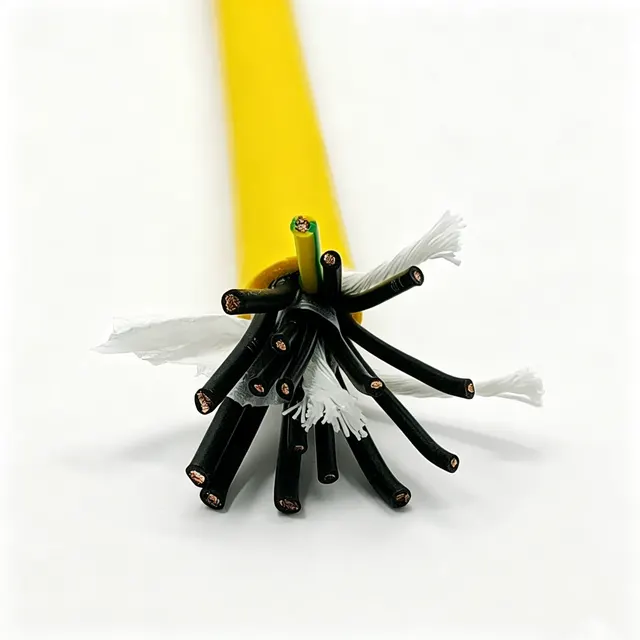 Crane drum cable 7×14AWG+10×18AWG
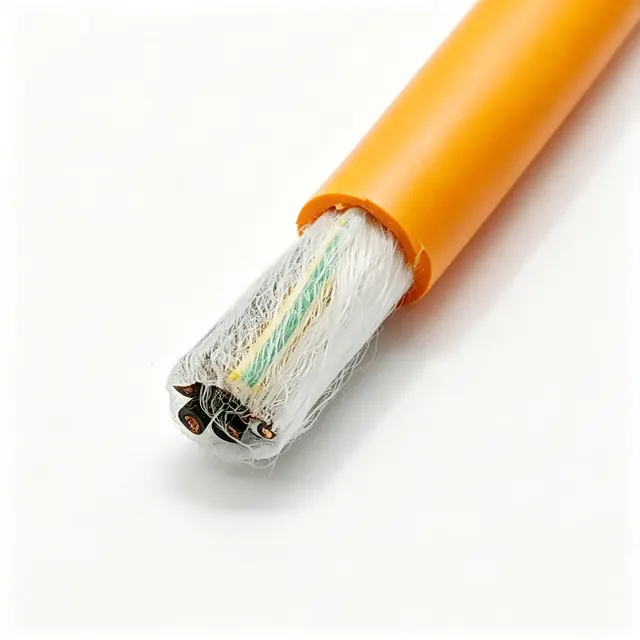 Drum cable 7x14AWG+8x18AWG+1x2x22AWG
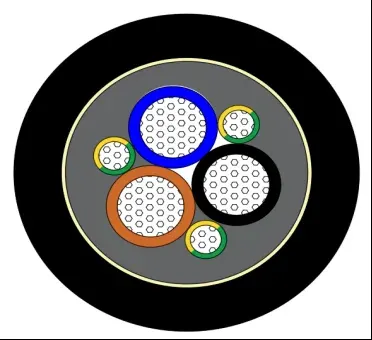 PDK21301
 PDK21303
Engineering enquiry