Spring Coiled Cable 4×2.5 mm², TPU Sheath 2 mm, OD 13 mm
Spiral & Spring Cables · Industrial Automation
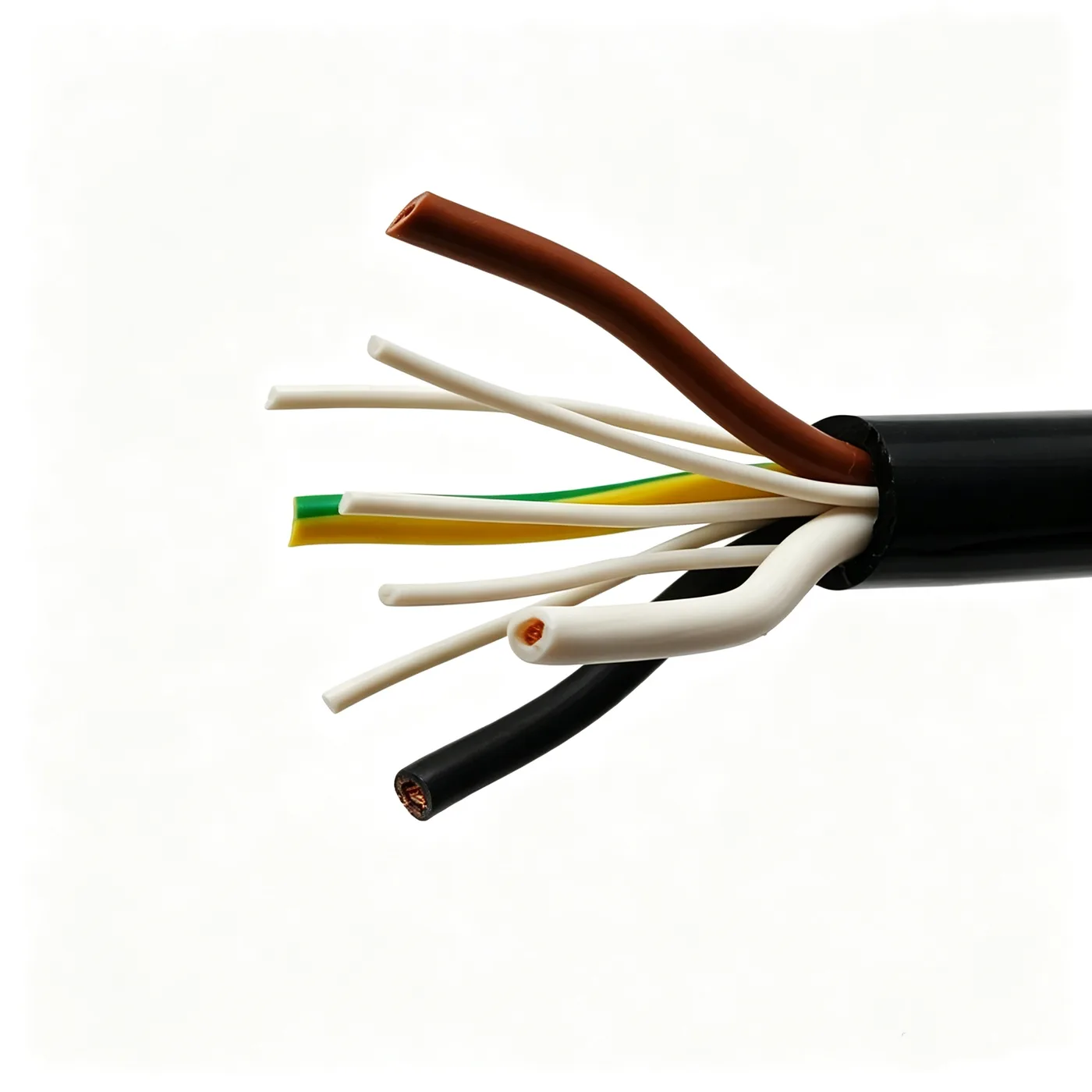
Spring cable 4×2.5
Retractable four-core 2.5 mm² coiled cable with bare copper strands, 0.82 mm PVC insulation and a 2 mm TPU sheath, finished OD 13 ± 0.3 mm, black.
Product overview
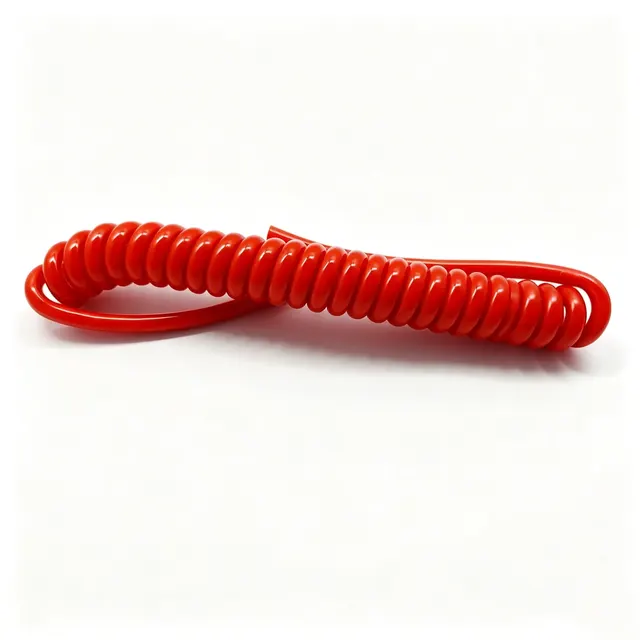
Spring or coiled cable uses a retractable wound construction: in the free state the cable forms a spiral spring, extends when pulled and retracts by itself when released. It is commonly used on mobile equipment and portable terminals that need frequent extension and retraction of cable in a limited space. Compared with a straight cable, it does not pile up, tangle or get stepped on around the equipment, which helps keep the working area tidy and passable.
This product has a four-core construction with a nominal cross-section of 2.5 mm² per core. The conductor is stranded from multiple bare copper wires, the insulation is extruded and the cores are cabled, then covered with a thermoplastic polyurethane outer sheath and wound into shape in a spring-forming process. The four-core combination covers both power circuits and control signal transmission and suits handheld control boxes, small instruments, portable tools and floor equipment that needs frequent cable extension.
Core count, cross-section, spring free length, straight tail length at each end, coil diameter and sheath colour can all be determined by the actual installation conditions; specific specifications are subject to the specification document confirmed by both parties.
Construction and materials
- Conductor: bare copper strands, multi-wire stranded construction, left-hand lay direction, stranded diameter 2.05 mm
- Insulation: PVC, 0.82 mm thick, insulated core diameter 3.7 ± 0.05 mm
- Cabling: four insulated cores twisted in a left-hand lay, cabling diameter 9 ± 0.2 mm Filler and tape: 1.5 mm filler strips between cores, a PVC centre filler, and non-woven tape wrapped over the cabling
- Outer sheath: TPU, 2 mm thick, black, finished outer diameter 13 ± 0.3 mm
- Spring forming: customisable
The conductor is made of multi-wire stranded bare copper with the lay direction controlled by the process, so that individual wires carry load evenly and are less likely to break locally during repeated bending and extension. The insulation is polyvinyl chloride, applied evenly with good concentricity, and the insulated core diameter is stable, which simplifies arrangement in the subsequent cabling process and core identification when wiring.
The four insulated cores are twisted into a left-hand lay, and the centre and the gaps between cores are filled with a PVC centre filler and filler strips respectively, followed by a non-woven tape wrap. The filling and tape keep the core section round, reduce friction between cores and provide cushioning during winding, so that the cores are not crushed at the bends of the coil.
The outer sheath is extruded over the whole core, bonding tightly and leaving a smooth, clean surface. The sheath material is thermoplastic polyurethane, which is oil resistant, abrasion resistant and tear resistant and stays flexible at lower temperatures, making it suitable for workshops, outdoors and locations with oil contamination or moisture.
The spring-forming process winds the cable into a helix and fixes the coil shape, so that the cable holds its specified free length. A straight section is left at each end for connection to equipment housings, terminals or connectors; at installation the fixing method can be adapted to the interface position so that the coil stays neat in use.
Key characteristics
- Retraction and recovery: the cable extends when pulled and retracts to its set shape when released, reducing tangling and cable trailing on the floor
- Abrasion and oil resistance: the outer sheath is thermoplastic polyurethane, with good resistance to oil, wear and common chemical media
- Tear resistance: the sheath bonds tightly and does not crack easily under mechanical scraping or pulling
- Stable construction: stranded conductors, filler strips and tape together form a round core that keeps its shape well after winding
- Tidy routing: the coiled construction takes up little space near the equipment, which suits routing in confined areas
Electrical and mechanical performance
The electrical performance of the cable is determined jointly by conductor, insulation and outer sheath. A stranded conductor is more flexible under repeated bending, and the load is distributed among the individual wires, which helps maintain circuit continuity; the insulation thickness is uniform and meets the normal requirements of low-voltage control and power circuits. Specific electrical values such as rated voltage, insulation resistance and withstand voltage should follow the specification document confirmed by both parties and are not numerically specified here.
On the mechanical side, the number of extension cycles, permissible extension length and minimum coiling radius all depend on the coil diameter, the straight tail length and the way the cable is used. Avoid applying a pull far beyond the design stroke to the spring section, and do not leave the cable under load at a sharp angle for long periods, so as to prevent sheath wear or conductor fatigue. Reasonable fixing points should be provided on the straight tails so that the pull is carried by the fixing structure and the load and movement at the end terminations are reduced.
Flexibility decreases at low temperatures, so extension and retraction should be gentle; where the cable is used at high temperature or near open flame, the suitability of the sheath material should be confirmed with the supplier. If the sheath cracks, cores become exposed or terminations work loose in long-term use, the cable should be replaced or repaired promptly to avoid short circuits or signal interruption.
Typical applications
- Handheld controllers and control boxes: the cable extends with the operator's movement around the workstation, so spare cable does not pile up underfoot
- Portable test and measuring instruments: connection cables between probe or sensor and host that need frequent extension, easily stowed in the coiled form
- Retractable power tools and lighting: the cable retracts automatically when switching between use and storage
- Ground support and test equipment: temporary connections between equipment and vehicles or racks, needing repeated mating and coiling
- Logistics sorting and automation cells: short-distance power and control connections for moving slides and scanning stations
- Indoor and outdoor mobile work: where the sheath needs some abrasion, oil and weather resistance, the polyurethane sheath version can be selected
Selection and customisation notes
Selection should start with the way the cable is used: whether it stays extended for long periods or is mainly stowed and pulled out occasionally; the oil, friction, moisture and temperature conditions of the environment also affect the choice of sheath material. Parameters to confirm include core count and core cross-section, coil free length and straight tail length, coil diameter and number of turns, sheath colour and end treatment.
Common end treatments are direct stripping for connection, crimped terminals and fitted connectors. When wiring, pay attention to the correspondence of core colours to avoid misconnecting power and signal circuits; if the equipment has additional requirements such as shielding, flex resistance or flame retardance, these can be raised during specification confirmation so that both parties can settle the construction. Before batch use, a sample trial installation is recommended to confirm that the extension behaviour of the spring section over the actual stroke and the fixing method meet requirements.
The flexibility, recovery and service life of a spring cable depend on the match between coil dimensions, conductor stranding and sheath material. Conductor stranding, filling method and sheath thickness must work together to keep electrical performance and appearance stable through repeated extension. PAIDE can provide specification confirmation and supporting services for spring and coiled cables; specific technical parameters are subject to the specification document confirmed by both parties.
Related in Spiral & Spring Cables
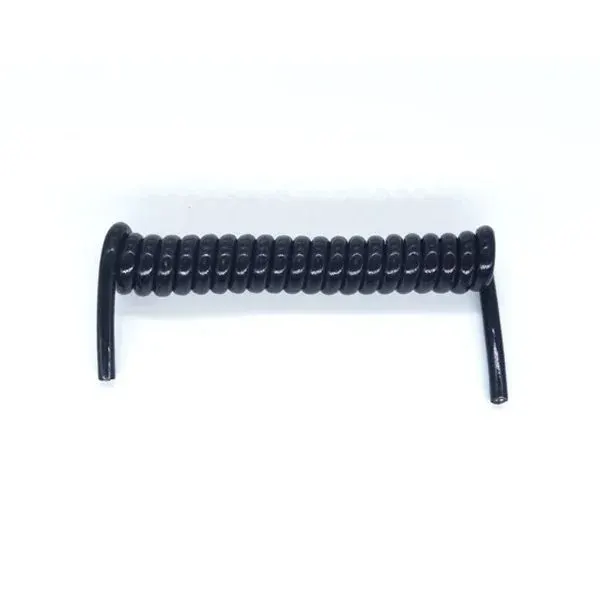 Custom
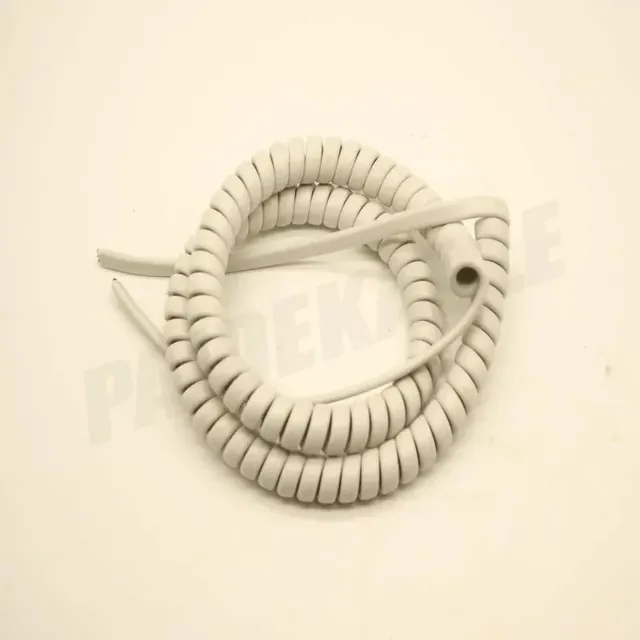 On request
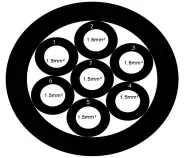 PDK71902
 Spring cable 2x3.2
Engineering enquiry