Tethered Drone Cable 2×1.2 mm², FEP, Aramid Braid
Tethered Drone Cables · Tethered Systems
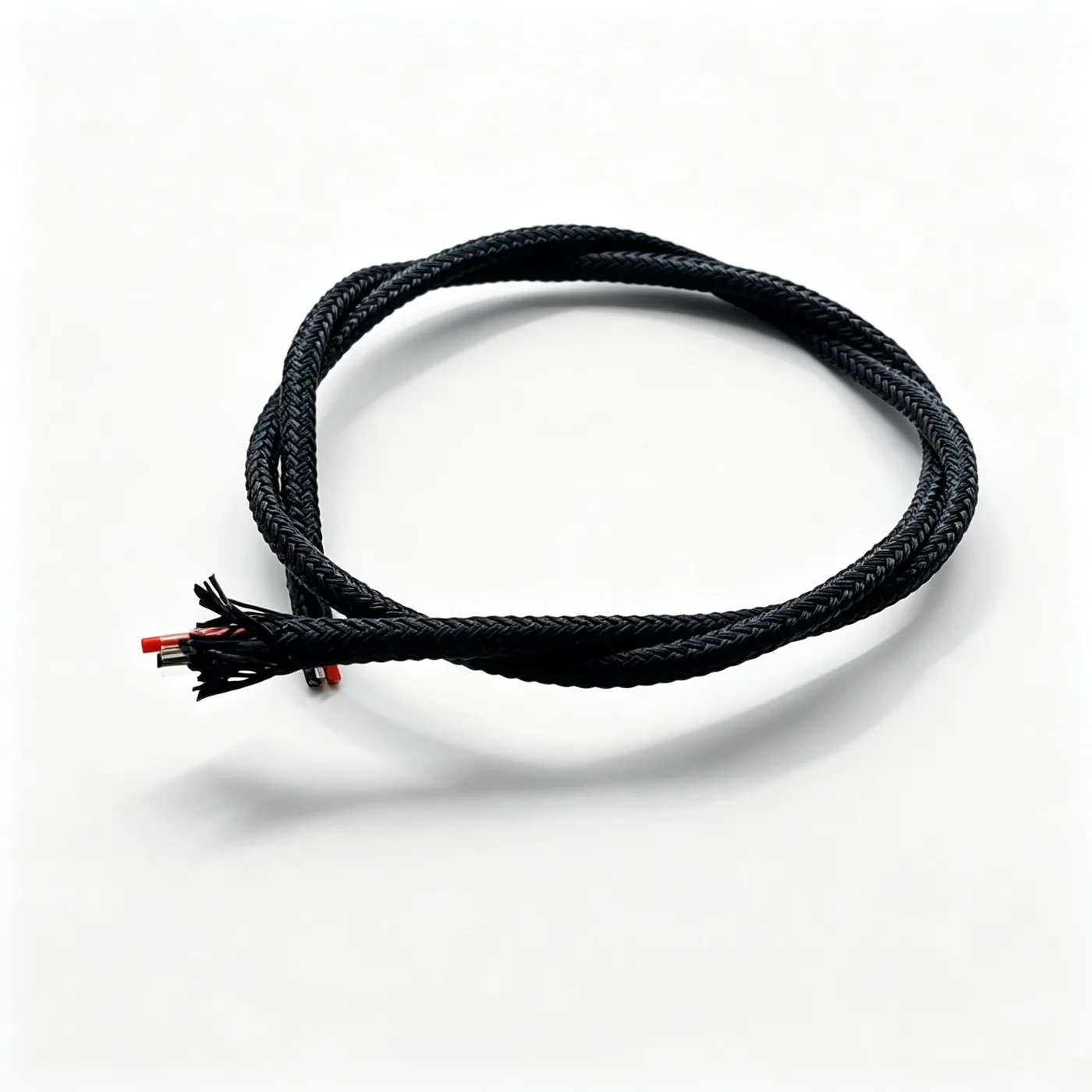
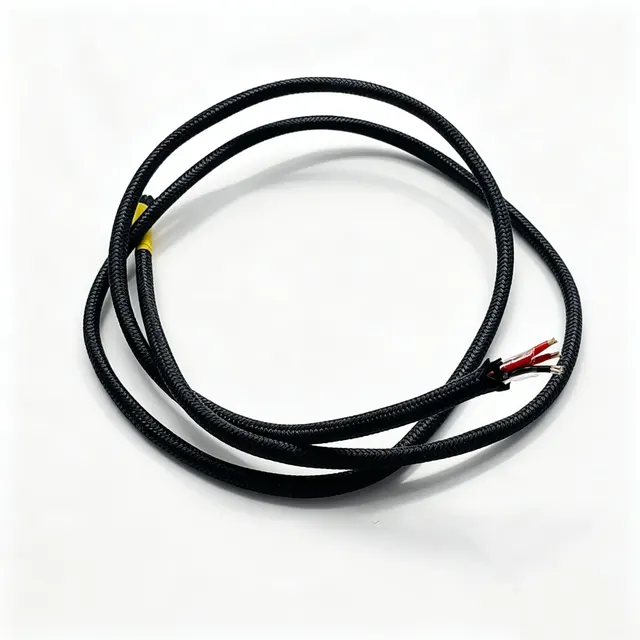
Tethered drone cable 2×1.2 mm²
Lightweight two-core tethered drone power cable, 2 × 1.2 mm² with FEP insulation and 98% aramid braid over the core, about 19 g per metre.
Product overview and applications
This product is intended for ground power supply to tethered drones and lighter-than-air platforms. During tethered operation the aircraft stays aloft for long periods and its equipment is supplied through a cable running from the ground power unit to the airborne end; the cable is continuously exposed to suspended tensile load, wind-induced swinging and repeated bending during ascent and descent, so weight per unit length, suppleness and tensile capacity directly affect the usable height and the endurance of a single flight.
This specification separates the conducting and load-bearing elements: the cores carry electrical power while the outer braid of black aramid fibre takes the mechanical load, and fillers and a wrapping layer keep the core round and the internal positions stable. The cable keeps diameter and weight as low as the current requirement allows, so that it takes as little as possible from the payload and lift of the aircraft. Delivery length, end treatment and connector type can be agreed to site conditions.
Construction and materials
Conductor: stranded conductor, 1.2 mm² per core. The two cores are identical in construction, which simplifies symmetrical connection at both ends.
Insulation: FEP, insulation diameter 1.8 ± 0.08 mm.
Cabling: cores stranded in a left-hand direction with a 1.0 mm transparent PE filler rod between them, wrapped with polyester tape to keep the core round and reduce core movement in repeated bending.
Reinforcement: black aramid yarn braid, designed for 98% coverage in a 16-spindle construction; tensile load is carried by the braid and is not passed directly to the conductors.
Outer sheath: customisable per project; material, colour and thickness are subject to the specification document confirmed by both parties.
The insulation is fluoroplastic, which has a wide temperature range and stable dielectric properties and allows the insulation requirement to be met with a thin wall, which directly helps control cable diameter and weight. The reinforcement uses high-strength aramid fibre, whose individual filaments are strong and tolerate repeated bending; multi-spindle interlaced braiding spreads the tensile load across the whole cable and also resists external abrasion and scratching. The fillers and wrapping layer neither conduct nor carry load, yet they determine the roundness and structural stability of the core, and are the key to the cable not loosening or the cores shifting after long repeated handling. The cores are coloured red and black for identification when connecting.
Key features
- Lightweight: thin-wall fluoroplastic insulation with lightweight stranded conductors keeps weight per unit length low, leaving more of the lift available for the payload.
- Independent load bearing: mechanical load falls mainly on the aramid braid and the conductors take no part in it, which improves electrical stability after repeated bending.
- Supple and easy to handle: the compact stranded construction keeps the cable soft, so it follows the attitude of the aircraft during repeated deployment and coiling.
- Stable construction: the filler rod and wrapping keep the core round and symmetrical, reducing friction and movement between cores.
- Environmental tolerance: fluoroplastic insulation has low moisture absorption and good chemical resistance, and the braid resists abrasion, which suits long-term outdoor use; specific suitability should be confirmed against the service conditions.
- Customisable: core count, cross-section, length, braid coverage and end treatment can all be adjusted to project requirements.
Electrical and mechanical performance
- Weight per unit length: about 19 g per metre.
- Rated voltage, temperature range, DC resistance and minimum bending radius: subject to the specification document confirmed by both parties.
- Tensile capacity and finished diameter: determined mainly by the spindle count, yarn size and coverage of the braid, and can be adjusted after calculation against working length, suspension height and wind load.
- Insulation diameter and core roundness: controlled to process parameters during manufacture, with tolerances stated to project requirements.
Typical applications
Ground power for tethered drones: continuous supply from a ground unit through the tether, supporting long endurance aloft.
Lighter-than-air platforms and tethered balloons: a lightweight, repeatedly deployable power path for airborne payloads.
Emergency communication and temporary lighting relays: supply cable for rapidly erected tethered platforms.
Monitoring and inspection flight profiles: power for sensors and cameras that hover for long periods.
Research and test platforms: lightweight supply cable with length, cross-section and end treatment customised per project.
Selection and customisation notes
- Establish the airborne power demand and operating voltage first, then set conductor cross-section and core count; this specification can be extended to other core counts and cross-sections on the same construction logic.
- Establish the suspension height and working length per flight, assess the tensile load the braid must carry, and adjust spindle count, yarn size and coverage of the reinforcement if necessary.
- Establish the handling method and permissible coiling radius, confirm the suppleness required accordingly, and protect the sheath at both end connections.
- If signals must also be carried, fibre or data units can be combined within the same core, with construction and diameter changing accordingly.
- Length, colour and end treatment can be agreed per project; a sample cable is recommended for verification before volume supply.
Related in Tethered Drone Cables
 2×20AWG
 7×0.5
 Drone cable 2x22AWG+2x1 fiber
 Drone cable 4×1.2
Engineering enquiry