Neutrally Buoyant UTP CAT6 Subsea Cable, Foamed PU Sheath, OD 8.2 mm
Zero-Buoyancy Cables · Marine & Subsea
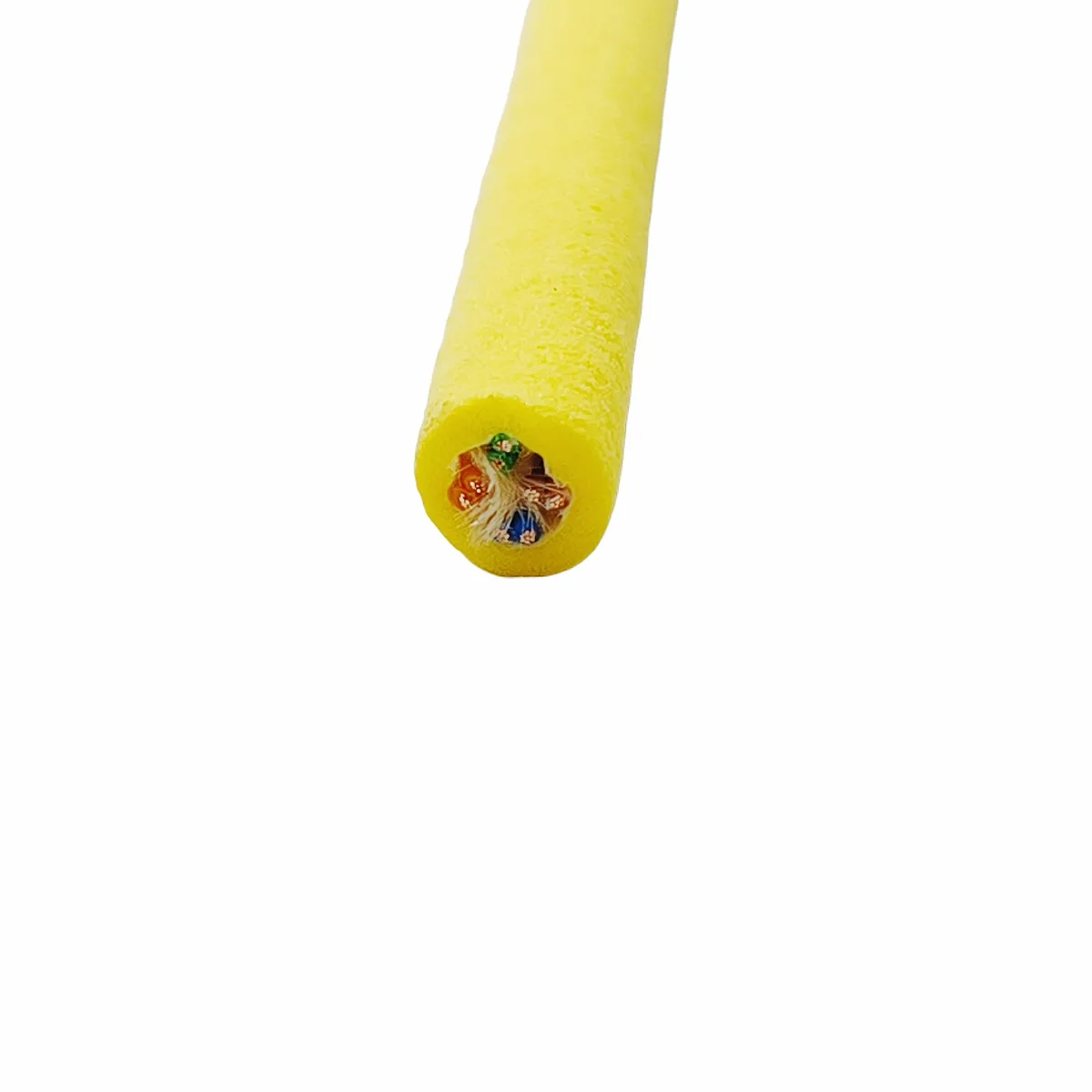
Floating cable UTP CAT6
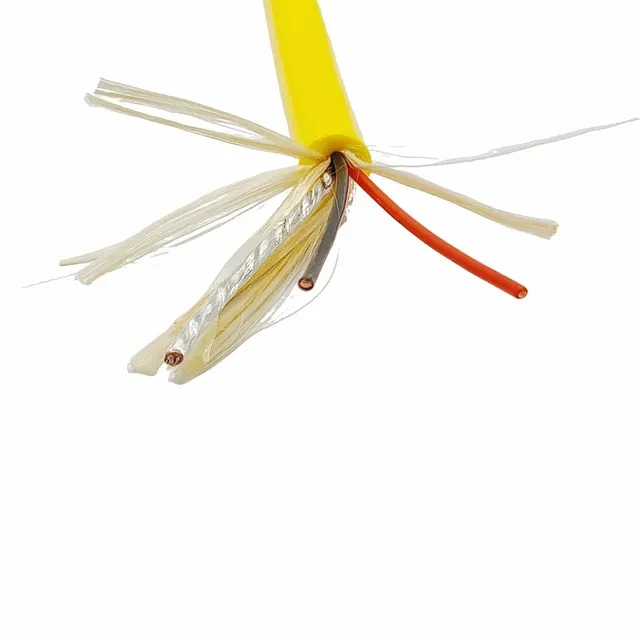
Four-pair UTP CAT6 zero-buoyancy cable with bare copper conductors, cross filler, 3000D strength and water-blocking yarns and foamed PU sheath.
Product overview
Zero-buoyancy cable is a class of specialty cable designed for underwater working environments. The core idea is to bring the density of the cable itself as close as possible to that of water, so that it approaches a neutrally buoyant state underwater and reduces the hanging load on the equipment end. This product uses a four-pair unshielded twisted pair (UTP) construction with a foamed outer sheath, covering both data transmission and flexible underwater deployment.
The cable suits applications that require long immersion, repeated deployment and retrieval, and towing. Conductor, insulation, strength and water-blocking elements are arranged in layers, so that signal transmission and mechanical load each have their own function; the foamed outer sheath lowers overall weight while maintaining sheath integrity, helping the whole cable hold a stable attitude underwater.
For underwater equipment, cable weight and current drag often have a direct effect on attitude control and endurance. A zero-buoyancy construction reduces the downward pull of the cable on the equipment and also helps keep the cable run smooth during deployment and retrieval, reducing kinks and twisting.
Construction and materials
- Conductor: bare copper strands, (24AWG)
- Insulation: PE, 0.25 mm thick
- Pair configuration: four twisted pairs, colour coded green/green-white, blue/blue-white, orange/orange-white, brown/brown-white, in a UTP arrangement without overall shield
- Central filler: a cross-shaped filler separates and holds the four pairs, reducing relative movement between them
- Strength and water blocking: four 3000D strength yarns and four water-blocking yarns laid in the core
- Wrap: non-woven fabric
- Outer sheath: foamed polyurethane, 1.75 mm thick, yellow
- Reference finished outer diameter: 8.2 ± 0.3 mm
The conductor is stranded from fine wires, balancing flexibility and current-carrying capacity so that it can be bent repeatedly in confined spaces. The insulation covers each individual conductor and forms the basic insulated unit of a pair. The non-woven wrap gathers the units into a round core and also provides separation and cushioning.
The strength yarns and water-blocking yarns are distributed evenly along the core: the former carries the tensile load during towing, deployment and retrieval, while the latter swells after water ingress and blocks the longitudinal path of moisture. The outer sheath is extruded from foamed polyurethane, forming a fine cellular structure inside the sheath; this reduces density while maintaining abrasion and hydrolysis resistance, and it is the key layer that gives the cable its buoyancy balance.
Key characteristics
- Close to neutral buoyancy: the foamed sheath lowers overall density and reduces the downward pull on underwater equipment
- Strength separated from conduction: tensile load is carried by the strength yarns, the conductors handle signal transmission only, so performance stays more stable after repeated deployment
- Longitudinal water blocking: water-blocking yarns swell on contact with water and limit moisture spreading along the core
- Stable construction: the cross filler separates the pairs, reducing mutual interference and positional drift between them
- Hydrolysis, oil and abrasion resistant: suitable for long-term immersion and oily media
- Flexible and easy to coil: the soft cable runs smoothly over winches and guide sheaves
These characteristics come from the combination of construction and materials: the twisting and the cross filler determine transmission stability, the strength and water-blocking elements determine mechanical strength and longitudinal sealing, and the foamed sheath determines buoyancy, abrasion and hydrolysis performance. The three have to be balanced as a whole against actual project conditions; amplifying one in isolation usually costs the others.
Electrical and mechanical performance
The product is designed to the four-pair twisted construction of Category 6 (CAT6) data cable and can be used for stable transmission of conventional network data. The thickness and density of the foamed sheath, together with the core construction, determine buoyancy and must be matched to the conductor size and strength-member configuration.
Specific electrical values (such as characteristic impedance, attenuation and near-end crosstalk) and mechanical values (tensile load, minimum bending radius, operating temperature range and so on) are subject to the specification document confirmed by both parties, and can be matched to the working depth, deployment frequency and equipment interface conditions of the project.
Typical applications
- Underwater vehicles and ROVs: as a data and signal link, keeping a stable attitude as the vehicle descends, ascends and cruises
- Underwater imaging and lighting: a flexible signal connection for cameras and fill lights, reducing the effect of the cable on camera attitude
- Marine observation and monitoring: deployment and recovery of sensors and acquisition equipment, keeping the structure intact under long immersion
- Underwater survey and measurement: a stable data channel for survey instruments, keeping the cable shape during deployment and retrieval
- Towing systems requiring buoyancy balance: reducing the effect of cable weight on the towing end
Selection and customisation notes
- Number of pairs, conductor size and whether to add pair shielding can be selected according to data rate and interface requirements
- The specification and number of strength elements can be adjusted to the actual working load and safety factor
- Sheath colour, outer diameter and buoyancy ratio can be adjusted to the depth and density requirements of the project
- Connector assembly at both ends and confirmation of cable length can be provided as required
- Where special temperature, oil or abrasion resistance is required, the sheath material can be matched further
The description above is based on the standard construction. Before delivery we recommend one construction review covering working depth, deployment method, installation space and interface requirements, so that a suitable balance of buoyancy and flexibility is achieved.
Related in Zero-Buoyancy Cables
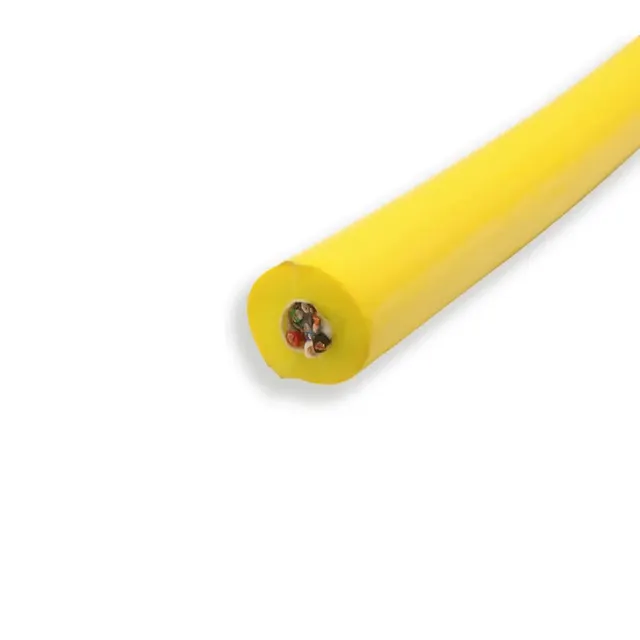 Buoyant cable 3x0.75+STP CAT6
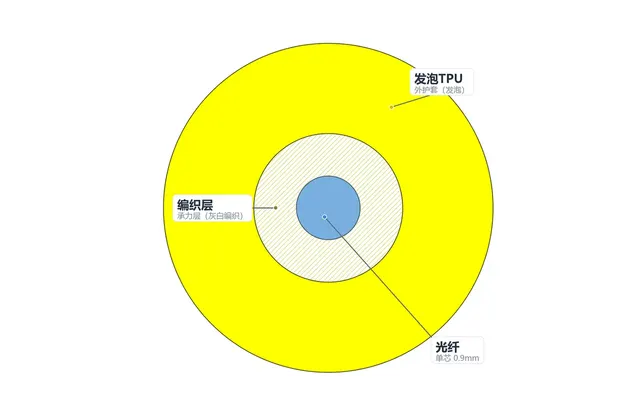 Buoyant cable, single sheath, 1-core fibre, 200 kg tensile
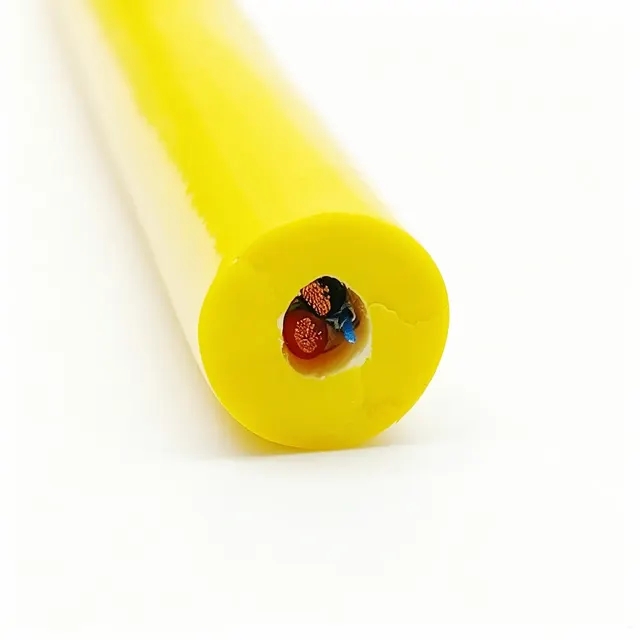 Double-layer neutrally buoyant cable 2×14AWG+24AWG+1SMF
 Double-layer zero-buoyancy 2×0.75 + (1×2×0.2)P
Engineering enquiry